
A vital shipment of high value electronics leaves a facility in Montreal at midnight and arrives in Tokyo by the following afternoon. Every hour matters. Missing the delivery window would halt production for a major product launch. This kind of urgent logistics is no longer rare. It is now a normal expectation in today’s fast moving global economy.
When deadlines are tight, distances are long, and reliability is critical, many businesses turn to air freight to meet their shipping goals. Whether you manage a complex supply chain or need rapid delivery of essential goods, selecting the right transport method becomes a strategic decision.
In this guide, you will learn how air freight works, what makes it different from other shipping methods, and which types of shipments are best suited for air transport. We will explore when it is the smartest option for your supply chain, how it compares to alternatives like sea or road transport, and what to expect in terms of customs clearance, security procedures, and overall logistics.
What is Air Freight Shipping?
Air freight is the process of transporting goods by aircraft from one location to another. This method is valued for its unmatched speed and reliability, making it a top choice for businesses that need fast delivery across countries or continents.
Shipments are moved through major airports where they are loaded onto either passenger planes or dedicated cargo aircrafts. Once airborne, cargo is handled with strict security protocols and is typically tracked in real time through advanced logistics systems. This allows businesses and customers to monitor the status of their shipments from pickup to delivery.
Types of Air Freight Services
Air freight solutions vary depending on delivery urgency, cargo size, and logistics needs. Here are the main types of services available:
- Standard Air Freight: The most common option for general cargo with balanced cost and delivery speed. Ideal for routine international shipments that do not require immediate arrival.
- Express Air Freight: Designed for urgent shipments that need the fastest possible delivery. Often used for time-sensitive goods such as medical supplies or high-value electronics.
- Consolidated Air Freight (LCL equivalent): Involves combining multiple shipments from different customers into one air cargo load. This is a cost-effective solution for smaller shipments that are not time critical.
- Charter Services: Provides a dedicated aircraft for a specific shipment. Suitable for oversized cargo, emergency logistics, or destinations not served by scheduled airline routes.
- Specialized Services:Tailored for goods that require unique handling, such as temperature-sensitive pharmaceuticals, live animals, hazardous materials, or high-security cargo.
Air Freight Services
The Air Freight Process: Step‑by‑Step
1. Booking and Documentation
The first stage in any air freight shipment begins with booking and documentation. Your logistics operations begin by contacting a trusted freight forwarder to get quotes, evaluate cost implications, and choose the most efficient routing. The freight forwarder will request details such as origin and destination airports, type of cargo, total weight and volume, and any specific service requirements such as delivery speed or special handling.
Once these details are confirmed and the booking is made, the required shipping documentation must be accurately prepared. These documents ensure your cargo complies with international shipping laws, supports smooth customs clearance, and enables full tracking throughout the journey. Common documents include:
- The Air Waybill (AWB), which serves as the contract of carriage and receipt of the goods
- The Commercial Invoice, which declares the value of the goods for customs
- The Packing List, detailing the contents, dimensions, and weight of each item
- Any required export licenses, certificates of origin, or hazardous goods declarations, depending on the cargo type
- Cargo insurance documents, to protect the shipment against potential loss or damage
Proper documentation is crucial not only for compliance, but also for ensuring that your cargo is accepted by the airline, cleared by customs authorities, and delivered without delays.
What is Cargo Insurance? Freight Transportation Guide
2. Cargo Collection and Consolidation
After booking and paperwork are complete, the physical movement begins. The freight forwarder arranges pickup of the cargo from the shipper’s warehouse or production facility. This may involve road transport to the forwarder’s consolidation hub or directly to the cargo terminal at the origin airport. At the consolidation facility the cargo is prepared for loading. If you’re shipping less than a full aircraft‑load, your freight forwarder may consolidate your shipment with others to optimize cost and utilise airfreight containers or unit load devices (ULDs).
Key tasks at this stage include packaging and labelling. The packaging must meet airline and air transport standards while providing protection for safe transit. Labelling should clearly indicate the destination, consignee details, and any handling instructions, and must align exactly with the shipping documents already prepared. This step is critical because poor packaging or incorrect labelling can result in delays, additional handling charges, or damage to the goods, all of which may increase the total shipping cost.
3. Export Customs Clearance
Before the goods can board an aircraft, they must pass export customs clearance. Security screening procedures at the origin airport and within the cargo terminal are mandatory. These may include X‑ray inspection, trace detection, physical examination of cargo and verification that restricted items have proper declarations.
The freight forwarder submits the export customs declaration along with the documentation prepared earlier. Clearance ensures the cargo is legally authorised for export and meets regulatory safety standards. When all is approved, the cargo is accepted by the airline, designated to a particular aircraft (either a dedicated freighter or belly space on a passenger aircraft) and moves to the loading stage.
4. Transportation to Airport and Loading
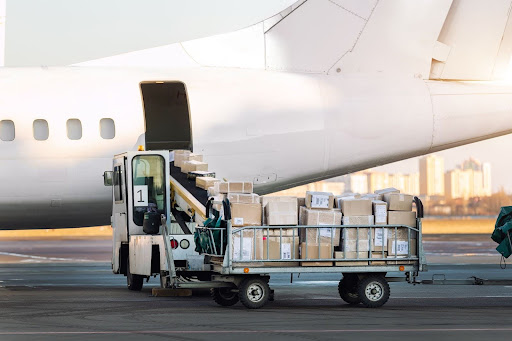
Once customs and security procedures are complete, the cargo is transferred from the consolidation facility or loading dock onto transport vehicles headed to the cargo terminal at the origin airport. At this stage, ground handling teams take over, managing the shipment check-in process and coordinating its movement to the aircraft loading area.
The cargo is carefully loaded into airfreight containers or secured onto pallets, known as unit load devices. These containers help maximise space inside the aircraft while protecting the goods during transit. Depending on the type of booking, the shipment may be transported in a dedicated cargo aircraft or within the cargo hold of a passenger aircraft. In both cases, precise loading is essential to ensure balance, safety, and overall efficiency of the flight.
The cost of shipping air freight at this point depends on several key factors. These include the total weight and volume of the cargo, the calculated volumetric weight, the selected aircraft type, route complexity, and any special handling needs. All of these considerations should have been carefully reviewed and agreed upon during the initial booking process to avoid unexpected charges or delays.
5. Flight and Transit
With the cargo loaded and secured, the actual air transport leg begins. Some shipments fly direct from the origin airport to the destination airport, in which case transit time is minimal. Others may involve connecting flights or stop‑overs, meaning the journey can include intermediate airports and handling at each transfer point.
During transit the freight forwarder or carrier may offer tracking services so you can monitor the shipment’s progress in real time, providing visibility across the supply chain. This tracking helps manage expectations around delivery time, identify delays and maintain accountability.
6. Arrival and Unloading
When the aircraft reaches its destination airport, the cargo is unloaded from the aircraft in the cargo terminal. For multi‑leg journeys this may include transfer between aircraft or terminals. Ground handlers and logistics operations at the destination airport coordinate offloading.
Once offloaded, the cargo is moved to the customs area or freight forwarder’s warehouse at the airport dock. At this point the tracking system shows arrival, and the consignee or their freight forwarder can prepare for import clearance and final delivery.
7. Import Customs Clearance
Arrival at the destination airport triggers the next key phase: import customs clearance. The freight forwarder submits the required documents to the relevant customs authority, which inspects the paperwork (commercial invoice, air waybill, packing list), may perform physical inspection of the cargo, and determines duty and tax payment if applicable.
Once duties and taxes are paid and all inspections are completed, the goods are formally released by customs authorities. At this stage, cargo insurance becomes particularly important. In the event of damage or loss, the freight forwarder or the shipper may submit a claim based on the terms of the insurance policy. Any delays, documentation errors, or customs-related issues can lead to increased costs, making this one of the most financially sensitive points in the entire shipping process.
8. Final Delivery
With customs clearance complete and the cargo released from the destination airport cargo terminal, the final leg begins: last‑mile delivery. The freight forwarder arranges transport from the airport to the consignee’s warehouse or final delivery address. This could involve trucking, rail or other road transport depending on location and infrastructure.
Upon delivery the consignee receives the goods and the delivery confirmation (Proof of Delivery or POD) is signed or electronically acknowledged. Tracking data is updated to show successful completion of the shipment. This final stage closes the shipping air freight journey.
Shipping Container Sizes: Complete Guide for Dimensions & Types
Key Players in Air Freight
Air freight operations involve several essential participants. Each one plays a specific role in ensuring the shipment moves smoothly from origin to destination:
- Shippers (exporters or importers): Initiate the shipment, prepare goods for transport, provide documentation, and select suitable freight services.
- Freight Forwarders: Coordinate the entire shipping process on behalf of the shipper. They handle booking, documentation, cargo consolidation, customs coordination, cargo insurance, and shipment tracking.
- Airlines and Cargo Carriers: Transport the goods between airports. This includes traditional airlines that use the cargo hold of passenger aircraft, dedicated cargo airlines, and integrators like FedEx, DHL, and UPS that manage air and ground logistics end to end.
- Customs Brokers: Handle the legal and regulatory aspects of import and export procedures. They prepare customs declarations, calculate duties and taxes, and ensure compliance with destination country requirements.
- Ground Handlers: Operate at airport cargo terminals. They are responsible for loading and unloading cargo, preparing containers, securing freight, and transferring shipments between storage and aircraft.
- Trucking Companies: Provide land transport before and after the flight. They collect cargo from shippers, deliver it to freight forwarders or airport terminals, and manage final delivery from the destination airport to the consignee.
What is a 3PL Logistics Provider? Advantages of Third-Party Logistics
Types of Goods Commonly Shipped by Air
Certain types of goods benefit greatly from fast air transport due to their value, sensitivity, or time-based demands. These shipments are typically coordinated through a freight forwarder who ensures every detail is managed from origin to destination.
Here are the most common categories of goods shipped by air:
- Pharmaceuticals and medical supplies: These products often require strict temperature control and fast delivery to maintain their effectiveness. Air freight ensures they reach hospitals, pharmacies, and distribution centers on time.
- Perishable food and flowers: Fresh produce, seafood, dairy, and floral products have short shelf lives. Quick air transport helps preserve their quality and safety throughout the supply chain.
- High-value electronics and components: Laptops, smartphones, semiconductors, and other precision equipment are commonly shipped by air to avoid damage and meet rapid demand across markets.
- Hazardous materials: With the right documentation and handling, air cargo can include regulated substances such as chemicals, batteries, or lab samples that must follow international safety standards.
- Time-sensitive documents and prototypes: Legal papers, government contracts, or new product prototypes are often delivered by air to meet deadlines or protect intellectual property.
- Luxury goods and fashion items: High-end fashion, jewelry, and accessories are frequently moved by air to meet seasonal launches or restock high-demand markets.
Each of these shipments depends on speed, reliability, and professional coordination. The role of air freight in global trade continues to grow as the logistics industry adapts to rising demand for faster, more secure transport options.
Frequently Asked Questions (FAQ) About Air Freight Shipping
How long does air freight take?
Delivery times vary depending on the route, service level, and customs clearance. Most international air freight shipments take between 1 to 5 days from departure to final delivery. Express services may deliver in under 48 hours for high-priority routes.
How much does air freight cost?
Air freight costs are calculated based on the greater of actual weight or volumetric weight. Prices also depend on factors such as distance, speed of delivery, type of cargo, fuel surcharges, and airport handling fees. On average, air freight is more expensive than sea or land transport, but much faster.
Is air freight cargo worth it for businesses?
Yes, in many cases air freight is worth the investment. It provides fast transit times, reliable scheduling, real-time tracking, and secure handling. It is especially valuable for urgent, high-value, or time-sensitive shipments where delivery speed outweighs shipping cost.
What goods are not allowed in air freight cargo?
Prohibited items vary by country and carrier but often include explosives, flammable substances, certain batteries, illegal drugs, and items restricted under international trade laws. Hazardous materials must follow strict packaging and documentation rules if approved for transport.
Air Freight Services
At Trans-Inter Logistik, our air freight services are designed to move your cargo quickly, securely, and cost-effectively across global markets. Whether you need express delivery for time-sensitive shipments, consolidated options for smaller loads, or charter services for oversized cargo, we tailor each solution to your logistics goals.
With access to major international airports and partnerships with leading airlines, we ensure efficient routing, full tracking visibility, and professional handling from pickup to final delivery. Our team manages everything from customs documentation to freight insurance, giving you a seamless shipping experience backed by precision and reliability.