
Steel, aluminum, resins, machined parts: your inputs arrive as a full truckload (FTL) when the volume fills a trailer, or as less-than-truckload (LTL) when a supplier only ships a few pallets. We time the pickup at your supplier to your production schedule, not the other way around.
Your raw materials arrive on time, your finished goods leave from the right dock.
With more than 25 years in freight brokerage, Trans-Inter Logistik organizes, from Laval, the transportation of your inputs, components and finished goods across Canada, the United States and Mexico, with vetted carriers and a free quote.
Our manufacturing freight services
As a freight broker, we organize your plant’s inbound and outbound freight: choice of mode and carrier, dock appointments and tracking through delivery. It is manufacturing logistics applied to road, air and ocean freight: the trucks and drivers belong to our network, while the planning and the visibility on every load are ours.
Your production line keeps running, your trucks keep pace.
Finished goods to your customers and distributors
Packed and palletized, your finished goods head to distributors, job sites or your customers’ distribution centres, with appointment booking and proof of delivery. If you sell to major chains, our page on deliveries to retailers details their dock requirements.
Production machinery and equipment
Depending on the equipment available in our network, presses, CNC machines and other heavy equipment can travel by flatbed trucking, loaded from the top or the sides. An oversized piece calls for oversize load transport: the carrier obtains the special permit, and we validate the route with them before confirming the assignment.
Urgent parts and line stoppages
When a component is missing and the line could stop, we look in our network for an expedited shipment: a dedicated truck with no intermediate stops or air freight for light parts, depending on availability at the time. You keep a single point of contact from pickup to receiving.
Imported components by container
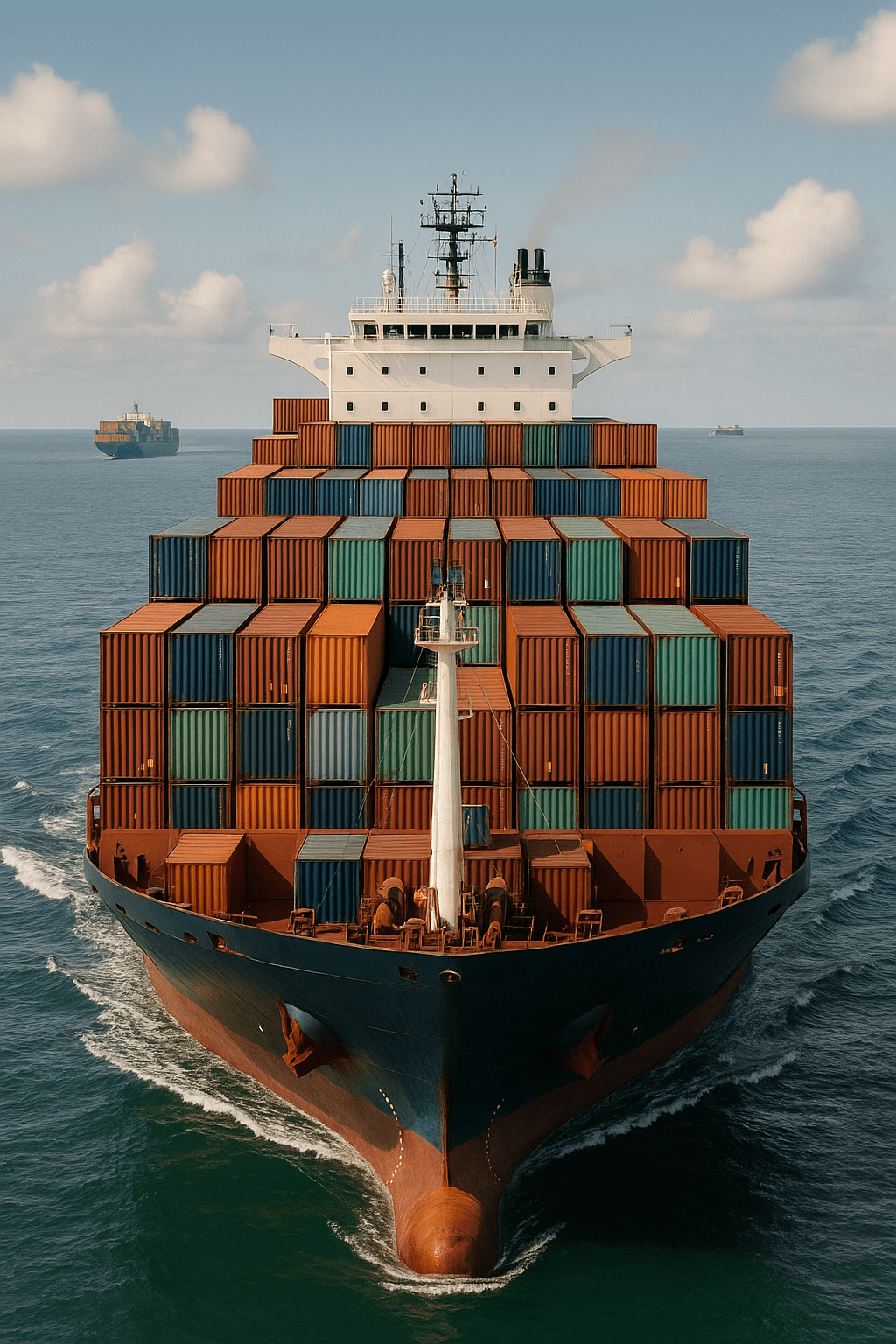
Your components made overseas go through our import from Asia service, backed by an on-site partner for quality control. Ocean freight brings the container to a Canadian port; for the leg to your plant, by road or by intermodal transportation, we confirm in the quote the option our network can cover.
What manufacturers trust us to ship
In the manufacturing sector, the type of freight dictates the equipment, the securement and the handling:
- metals, steel and aluminum in bars, coils or profiles, heavy before they are bulky;
- auto parts and components for assembly, delivered on a tight schedule;
- pallets of finished goods, packed and ready for distribution;
- chemicals, paints and adhesives that may be classed as dangerous goods;
- machinery, moulds and irregularly shaped industrial equipment.
For dangerous goods, it is the consignor’s responsibility to classify them, according to Transport Canada. We then assign the load to a carrier in our network whose staff hold a transportation of dangerous goods (TDG) training certificate, with the documents you provide.

Our 5-step manufacturing freight method
The same approach for one pallet of parts or a weekly loading program:
- You share the details. Products, weight and dimensions, number of pallets, origin, destination, dock hours and frequency.
- We choose the mode. Full truckload, consolidated LTL, flatbed, intermodal or air, depending on volume, urgency and the lane.
- We select the carrier. Safety, insurance, equipment and track record go through our selection criteria.
- We plan the pickup. Appointment at your supplier or at your shipping dock, securement specified to the carrier and bill of lading ready before the truck arrives.
- We track through delivery. In-transit tracking, a backup plan if something unexpected happens, proof of delivery and feedback to fine-tune the next load.
A plant to supply or ship from?
Tell us what comes in, what goes out and how often: we come back with the mode and the carrier that fit.
Just-in-time manufacturing freight
In a just-in-time operation, a late delivery costs you downtime. So we plan your shipments around your receiving windows and inventory levels: pickup booked in advance, dock appointment confirmed and an alert as soon as a load runs late, to keep production running.
If the usual carrier on a lane is fully booked, another qualified carrier in our network takes over: the reliability of your supply rests on a network, not on a single truck. When several suppliers in the same region ship you small volumes, LTL consolidation groups them on the same run.
Manufacturing shipments to the United States
What you make also sells elsewhere in North America. We coordinate these loads as cross-border shipping, from your plant’s dock to your American or Mexican customer’s dock. At the border, we work with specialized partners.
Manufacturing freight cost factors
The price of a manufacturing shipment depends on factors we break down one by one in the quote:
- volume and mode, from a few consolidated pallets to a full truckload;
- weight, dimensions and payload, which depend on the legal weight of a 53-foot trailer;
- the direction of the lane, the carrier’s chances of a loaded return trip and the fuel surcharge;
- urgency, specialized equipment and the permits for an oversize load;
- the season, including the spring thaw period in Quebec.
To understand each item, read our guide to road freight costs in Canada; to cover the value of your parts in transit, see cargo insurance.
Why trust Trans-Inter Logistik with manufacturing freight
- A freight broker active since 2000. From our Laval offices, we know the industrial freight lanes from Quebec to Ontario, the United States and Mexico.
- Every mode under one roof. Road, flatbed, intermodal, air and ocean: a single contact for your entire supply chain.
- Vetted carriers. Safety, insurance and compliance checked before every load.
- Room to grow. If your volumes one day call for warehousing or distribution, see our 3PL logistics services page: we assess with you what applies to your situation.
Since 2000, we have planned freight for local plants as if the production were our own.
Manufacturing freight across Canada
We pick up your loads in Quebec’s industrial parks and deliver them anywhere in Canada. Two manufacturing hubs have their own freight broker page: Montreal and Toronto. Do you make building materials or components? See also our construction freight broker page.
FAQ: manufacturing freight broker
What does a freight broker do for a manufacturer?
It acts as your outside shipping department for every shipment from the plant: raw materials coming in, finished goods going out, machinery between two sites. At Trans-Inter Logistik, that includes choosing the mode, vetting the carrier, booking appointments, tracking in transit and proof of delivery. The trucks and drivers belong to the carriers in our network.
Do you have your own fleet of trucks?
No. Our model has been freight brokerage since 2000: for each load, we pick the vetted carrier whose equipment, availability and usual lanes match your freight. The advantage for a manufacturer is access to several fleets at once, which helps when capacity tightens at the end of a quarter or before a holiday.
FTL or LTL: which one should a plant choose?
A full truckload (FTL) fits when your goods fill a trailer or need a direct run with no transfer. Less-than-truckload (LTL) means you pay for the space used in a trailer shared with other shippers, which suits a few pallets. The quote prices both options based on weight, volume and your delivery deadline.
Can you deliver an urgent part to prevent a shutdown?
It is possible, depending on our network’s availability at the time of the request. For a component that threatens to stop a production line, we look for an expedited shipment: a dedicated truck running without intermediate stops, or air freight for a light part over a long distance. As soon as a carrier confirms, you receive the pickup time and tracking to your dock.
Who classifies dangerous goods shipped by a plant?
The consignor. According to Transport Canada, it is the consignor’s responsibility to classify a substance, product or organism and to determine if it is dangerous goods. Once your team provides the classification and documents, we assign the load to a carrier in our network whose staff are TDG trained, then track the shipment to destination.
Do you ship industrial machinery?
Yes, depending on the machine and the equipment available in our network, which we confirm in the quote. A machine within regulatory limits can travel on a flatbed or a lowboy trailer. Beyond that, it becomes an oversize load: the carrier obtains the special travel permit, and we validate the route and escorts with them. Lifting and installation in the plant remain with your team or your rigger.
How is the cost of manufacturing freight calculated?
It depends mainly on the mode, weight and dimensions, distance, the lane and whether the carrier can get a loaded return trip. Add the fuel surcharge, urgency, specialized equipment and any permits. We present these factors in the quote, with the options that help you optimize your shipping budget.
Does the spring thaw affect manufacturers' shipments?
Yes. During the thaw period, Quebec’s transportation ministry reduces the allowed loads of heavy vehicles in three zones, on dates it can move earlier, suspend or delay depending on the weather. A heavy load of steel or machinery may then require more than one truck. We factor this in from the quote for your spring shipments.
Your manufacturing freight partner
Send us your volumes, origins and destinations: we propose a shipping plan that keeps pace with your production.