
53-foot dry van
The baseline equipment for full truckload in North America. This enclosed trailer takes palletized goods, packaged products and general freight, which covers the vast majority of the loads we book.
Full truckload
Tell us what you are shipping, where from and where to, and we come back with the right equipment.
Twenty-five years filling trailers for shippers who cannot afford a mistake.
FTL shipping means a 53-foot trailer reserved for your load alone, from the shipping dock to the receiving dock, with no transloading. Trans-Inter Logistik coordinates these full truckloads across Canada, the United States and Mexico, through a network of vetted carriers.
We are a broker, not a carrier. So we go find the right trailer on the market instead of selling you the one sitting in the yard.
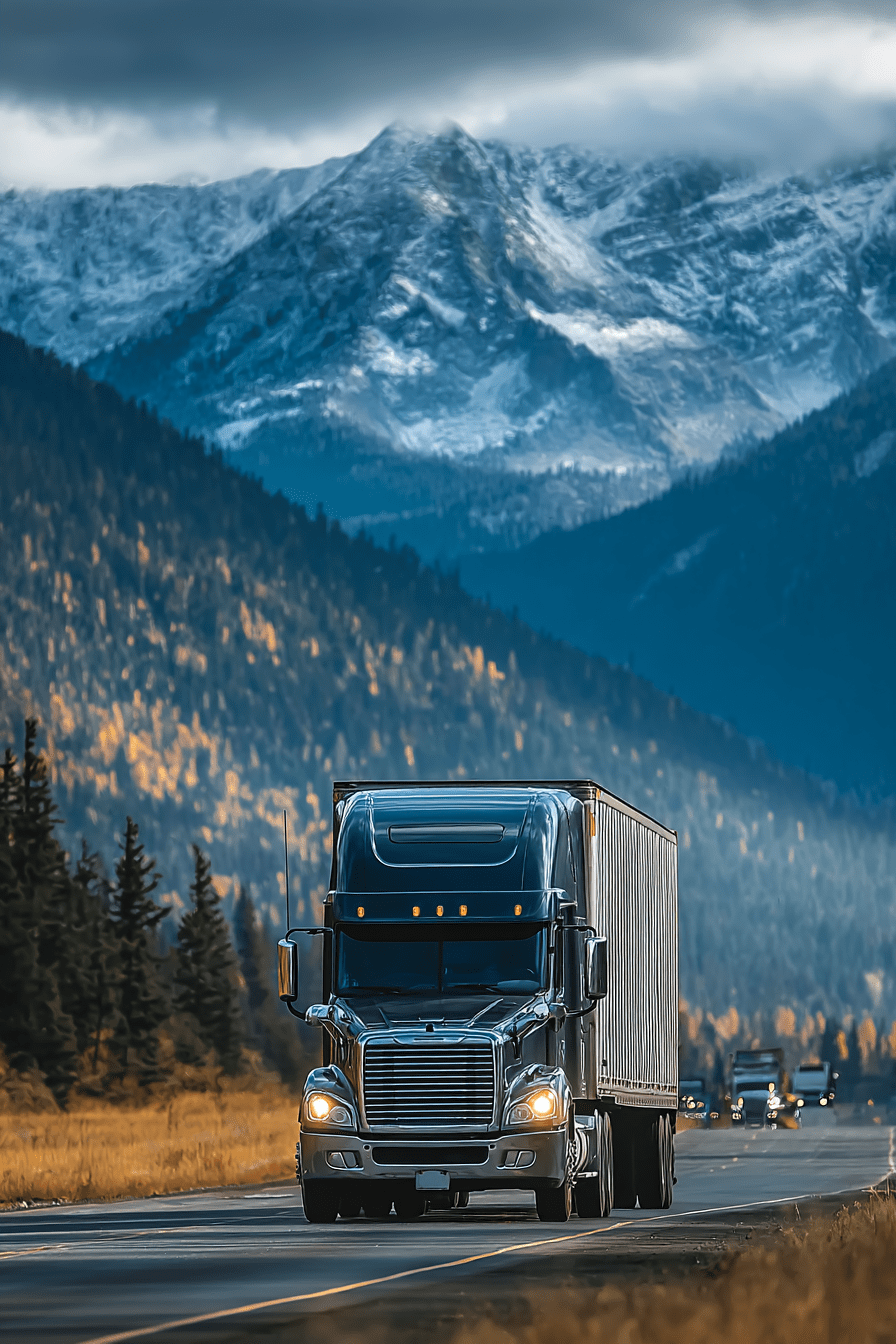
FTL stands for full truckload, also written full truck load, and known as truckload shipping or a full trailer load. Your cargo takes up the whole trailer and moves direct, from pickup to unloading.
No consolidation terminal, no intermediate stop, no transfer onto a second truck. The trailer is sealed at origin and reopens at your customer's dock, with no warehousing and no handling in between.
That non-stop run shortens transit times and cuts the risk of damage and loss. It is the most predictable mode in road transport, and the one that leaves the least room for unpleasant surprises.
A shipment crosses over from partial to full well before the trailer is physically full. Six signals say so:
Three signals out of six, and the math almost always tips toward the full truckload.
Our comparison of LTL vs FTL breaks down the mechanics of the decision. For volumes that do not fill a trailer, LTL freight, or less-than-truckload, remains the right answer.
The baseline equipment for full truckload in North America. This enclosed trailer takes palletized goods, packaged products and general freight, which covers the vast majority of the loads we book.
Refrigerated for chilled and frozen goods, heated to protect from freezing between November and April in Québec. The full temperature ranges are set out on our temperature-controlled shipping page.
Steel, machinery, structural components: everything that will not go in through a rear door. We coordinate flatbed trailers, step decks, Conestoga and curtainside trailers, and oversize permits, depending on the provinces and states crossed. Open-deck freight calls for its own specialized equipment.
When the deadline rules, two drivers take turns and the trailer barely stops. Dedicated capacity goes further: a carrier assigned to your recurring volumes, with the scheduling flexibility that comes with it.
We coordinate TDG-certified carriers for regulated commodities, and we verify their compliance before booking. Classification and documentation remain the shipper's responsibility under the Transportation of Dangerous Goods Act.
We compare several trucking carriers on your corridor before coming back to you with a price.
Request a QuoteThis is where most FTL shipments go off the rails: a load that is perfectly legal in Québec is not necessarily legal once the border is behind you.
A 53-foot dry van takes 26 standard 48 x 40-inch pallets on the floor, more if the goods can be double stacked. So the binding constraint is almost never floor space; it is weight.
Three tonnage benchmarks for the North American corridor:
A refrigerated trailer also weighs more empty than a dry van, which takes a few hundred more kilograms off your payload. We account for it before booking, not at the scale.
We do not publish rates, because no honest FTL rate holds up without knowing the corridor. Here is what we look at to build your quote and protect your budget:
Our guide to road freight costs in Canada digs into each of these factors. Over very long distances, intermodal transportation combines rail and road and often becomes the more cost-effective option.

That end-to-end traceability is what separates a well-kept file from a trailer number lost in a system. On cross-border shipments, customs clearance goes through licensed customs brokers we work hand in hand with, as our cross-border shipping in Montréal page explains.
Since 2000, we have been filling trailers without owning a single one.

Full truckload serves first and foremost those who ship heavy and ship often: manufacturing (raw materials and finished goods on just-in-time flows), distribution and retail (replenishment of distribution centres), food and beverage (perishables in refrigerated trailers), construction (steel, lumber and building materials on flatbeds), automotive (parts synchronized with the supply chain), pharmaceutical (sensitive, high-value goods), agriculture (seasonal products) and e-commerce (bulky consumer goods).
Every sector imposes its own equipment and scheduling constraints, and that is what guides the choice of carrier. If your FTL loads come back every week, our 3PL logistics service takes over the planning entirely, with the efficiency that a single point of contact brings.
We serve shippers in Montréal and Toronto from our Laval office, active since 2000.
FTL is the abbreviation for full truckload. A single shipment occupies the entire truck and travels direct to its destination, without being consolidated with other shippers' goods.
Twenty-six standard 48 x 40-inch pallets set on the floor, in a single tier. Double stacked, light goods can go up to about fifty pallets, as long as the weight limits hold.
In Québec, count on roughly 24,900 kilograms (55,000 pounds) of goods in a 53-foot tandem-axle dry van under normal conditions, and roughly 30,800 kilograms (68,000 pounds) on three axles. The spring thaw period lowers those ceilings, and the American Interstate system lowers them further still.
Yes, and the gap comes from the structure of the network, not from the speed of the truck. A full truckload runs without stopping, whereas an LTL shipment passes through one or more consolidation terminals, which stretches the transit time.
Every trucking carrier in the network holds its own coverage, which we verify before booking. For high-value cargo, separate cargo insurance bridges the gap between the carrier's liability and the real value of your load.
A carrier offers you its fleet and its lanes. A freight broker compares several vetted carriers on every load, which gives you capacity in peak season, negotiated rates and a single point of contact.
Give us the origin, the destination and the weight: we come back with the trailer, the carrier and the transit time.
Request a Quote