



Cold chain freight

Tell us what you are shipping and to what temperature range, and we come back with the right refrigerated carrier.

Request a Quote

Twenty-five years holding the cold chain, from the loading dock to your customer's door.

Established in Laval since 2000, Trans-Inter Logistik coordinates your temperature-controlled shipping as full truckloads, from frozen to controlled ambient, across a network of vetted refrigerated carriers in Canada, the United States and Mexico.

Trans-Inter Logistik refrigerated freight coordination

The temperature ranges we coordinate

Temperature-sensitive goods do not need cold. They need a precise temperature range, held without interruption from loading to delivery.

  • Frozen

    Frozen and deep-frozen foods, ice cream, meat and seafood, in a reefer trailer set below freezing.

  • Chilled

    Fresh produce, dairy, cut flowers and perishables that travel just above freezing.

  • Pharmaceutical-grade chilled

    The narrow range that vaccines, biologics and medications require, with continuous temperature recording.

  • Controlled ambient

    Goods that are damaged by heat as much as by cold, held in a stable, moderate range.

  • Freeze protection

    Liquids, paints, beverages and chemicals that simply have to be kept from freezing through the Québec winter.

  • Multi-temperature runs

    Some reefer trailers with bulkheads allow two temperature ranges to be combined on the same run. We validate the configuration with the carrier before confirming your shipment.

Freeze protection and temperature-controlled shipping are two different services

This is the costliest confusion of the Québec winter, and it is paid for in discarded product.

Freeze protection

Freeze protection keeps your cargo from falling below 0°C; it does not guarantee a specific temperature range.

A trailer relying on its insulation and on a short transit time, by contrast, only delays freezing.

Heated temperature-controlled transport

Heated temperature-controlled transport, by contrast, holds a real setpoint, because the reefer unit also runs in heating mode.

Winter corridors

On a winter corridor like Montréal to Winnipeg in January, confusing the two means guaranteed product deterioration.

So before quoting, we always ask you the same three things: the target range, the acceptable tolerance, and what happens to the product if it leaves that range.

How we choose your refrigerated carrier

  1. You share the details. Commodity, temperature range, weight, pallet count, origin, destination, dates and documentation requirements.
  2. We filter the network. Safety ratings, insurance, claims history in refrigerated freight and the carrier's food safety standards, including HACCP certification. That is the bar we set out in our guide to choosing a bonded carrier.
  3. We validate the equipment. Maintenance of the reefer unit, the trailer's pre-cooling capability, on-board data logger, bulkheads if your load runs multi-temperature.
  4. We write the setpoint on the bill of lading. The target temperature and the unit's operating mode appear in black and white, never in a verbal agreement.
  5. We track the load. Temperature monitoring en route, real-time alerts, exception handling, proof of delivery and a temperature report when your customer requires one.
Get your refrigerated shipping quote

Give us the temperature range and the corridor, and we will line up qualified carriers and come back to you quickly.

Request a Quote
Refrigerated road transport for the food cold chain

Food cold chain: food safety, HACCP and traceability

In the food industry, temperature is not a quality criterion; it is a food safety criterion. One temperature excursion in transit and your lot becomes a compliance problem, not simply a loss.

We select carriers whose trailer sanitation, pre-cooling and traceability protocols hold up to a food safety audit by your retail customers.

An honest clarification

An honest clarification: Trans-Inter Logistik does not hold HACCP certification. The carriers we coordinate are the ones that hold it, and we confirm which carrier before loading.

Pharmaceutical cold chain: excursions and data loggers

A temperature excursion is a departure from the validated range. It cannot be seen with the naked eye, it is proven by the data.

We require a data logger on pharmaceutical loads and we agree on the excursion protocol before departure: who is alerted, within what timeframe, and who decides the fate of the product. That call belongs to you or your regulatory affairs team, never to the carrier.

The carriers we retain work to Health Canada's expectations for temperature control of drugs during storage and transportation (guideline GUI-0069). Here again, we coordinate compliant carriers, we do not stand in for them on compliance.

The broker's advantage: several refrigerated fleets instead of one

A carrier sells you the capacity of its own fleet. A freight broker sells you access to several, and in refrigerated freight that shows up exactly when it counts.

  • Harvest peak, from summer into fall, when reefer trailers get scarce in Québec.
  • The days before holidays and month-ends, when docks are backed up and the first carrier you call is booked solid.
  • Long corridors to Western Canada, the United States or Mexico, which no single fleet covers in full.
  • A carrier pulling out mid-shipment, when a qualified replacement is needed the same day.

And you keep a single point of contact. You are not calling five carriers to find out where your load is.

Full truckload, and the other modes when it does not fit

In temperature-controlled shipping, we coordinate full truckloads only. That is not a capacity limit; it is a deliberate method.

Refrigerated full truckload trailer on the road

Refrigerated FTL, the full truckload

Full truckload (FTL) reserves an entire reefer trailer for your goods. One temperature setpoint, no intermediate stops, no door openings en route, no handling by a third party.

That is what makes the difference on a temperature-sensitive product: every pickup or delivery stop opens the doors and lets ambient air in. On a load shared between several shippers, those openings add up and nobody can guarantee you the temperature range end to end. In full truckload, the trailer leaves pre-cooled, closes on your goods alone and reopens at destination.
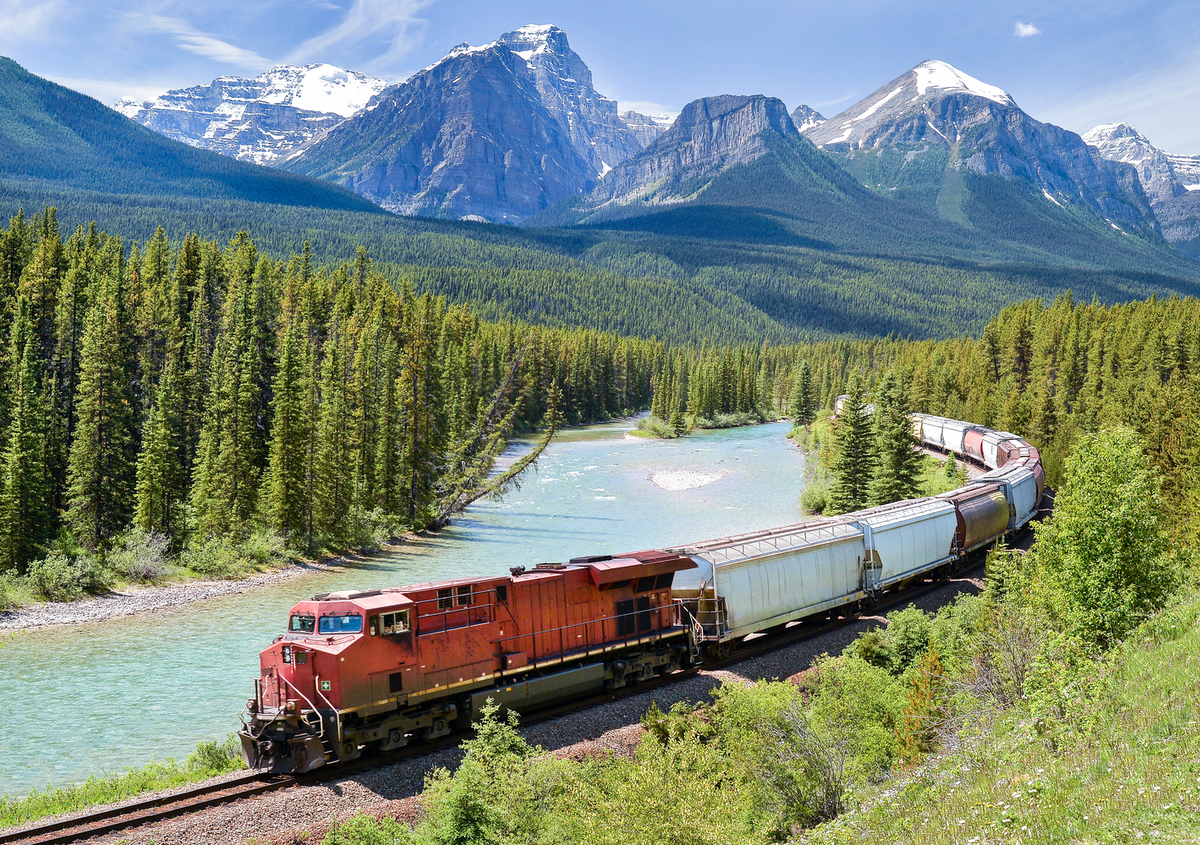

Long-distance intermodal rail transport with refrigerated containers

Temperature-controlled intermodal

Over long distances, intermodal transportation combines rail and road with refrigerated containers powered continuously. Cheaper per kilometre, slower in transit, reserved for stable products.

Air freight for urgent temperature-sensitive shipments

Air freight for urgent shipments

For a pharmaceutical lot or a fresh product with a very short shelf life, air freight remains the only mode fast enough, with insulated packaging, gel packs or dry ice depending on the product.

All of it rests on our North American road transport network, and it folds into your supply chain as a complete 3PL logistics program when your refrigerated shipments are recurring.

What moves the cost of a temperature-controlled shipment

Refrigerated freight costs more than dry freight, and every difference has a reason:

  • the temperature range, with frozen and pharmaceutical loads demanding more fuel and rarer equipment;
  • the season, with harvest peak and winter demand for heated transport tightening reefer capacity;
  • the corridor and the empty backhaul, a destination with no return freight always costing more;
  • dwell time at the dock, since every hour with the reefer unit running is billable;
  • monitoring, data logger and temperature reporting requirements.

We balance these factors against your budget rather than chasing the lowest rate, which often hides a poorly maintained reefer unit. Our guide to road freight costs in Canada details the mechanics, and cargo insurance covers what the cold chain alone cannot guarantee.

Cold does not forgive improvisation. That is why we plan before we load.

Where we coordinate your refrigerated shipments from

Our offices are in Laval, minutes from the main food distribution corridors of Greater Montréal. We arrange loading anywhere in Québec and delivery anywhere in North America.

See our local pages for Laval, Montréal, Québec City, Sherbrooke and Trois-Rivières, five markets where the food industry accounts for much of the refrigerated freight.

Trans-Inter Logistik team coordinating shipments from Laval

Frequently asked questions about temperature-controlled shipping

A modern reefer trailer covers everything from deep-frozen up to controlled ambient, and can heat in winter. What matters is not the capability of the equipment; it is the written setpoint, the pre-cooling before loading and the discipline at the door openings.

Not on every shipment. It is unavoidable in pharmaceuticals and for any retail customer that requires a temperature report, and strongly recommended on long corridors. Without a continuous record, a temperature excursion becomes impossible to document, and therefore impossible to claim.

We receive the alert, we reach the carrier to adjust the refrigeration or to trigger a diversion to cold storage, and we document the event with the readings. The decision to keep, quarantine or destroy the product is yours: they are your goods and your regulatory framework.

We plan for the wait at the border with the reefer unit running, and we make sure the cross-border documentation is complete before departure, because an incomplete file immobilizes the trailer. Customs clearance itself goes through a licensed customs broker we work hand in hand with.

Your cold chain, coordinated end to end

Ready to ship? Give us the product, the temperature range and the corridor, and we find the refrigerated carrier that holds the setpoint.

Request a Quote